

In this essay:
Three portals drawn from an ordinary bedroom, and the ancient company they keep
Heraclitus on the bow and the lyre: in Greek, one accent separates biós, the bow, from bíos, a life
Science arrives at this terrain and finds the mystics already camped there: a neuroscientist, a biologist, and a physicist walk into the betweenness (no, this isn’t the beginning of a joke)
Nature’s Values step forward for the first time: Generosity, Resonance, Harmony, the trifecta of nature’s music
Why the wisest hours sit at the day’s edges, where Minerva’s owl takes flight
Voices along the way: Rilke, Heraclitus, Carl Jung, Heidegger, Iain McGilchrist, Lewis Thomas, Carlo Rovelli, Erwin Chargaff, Hegel, James Hollis, and a song from Marc Scibilia.
When [someone] walks out at dawn or watches closely how dusk falls, taking in these moments in their fullness, when [they] sense what happens at such times, [their] profession drops away as if they were dead, although they now find themselves in the very center of life.
— Rainer Maria Rilke¹
“Dad, what happens when we die?”
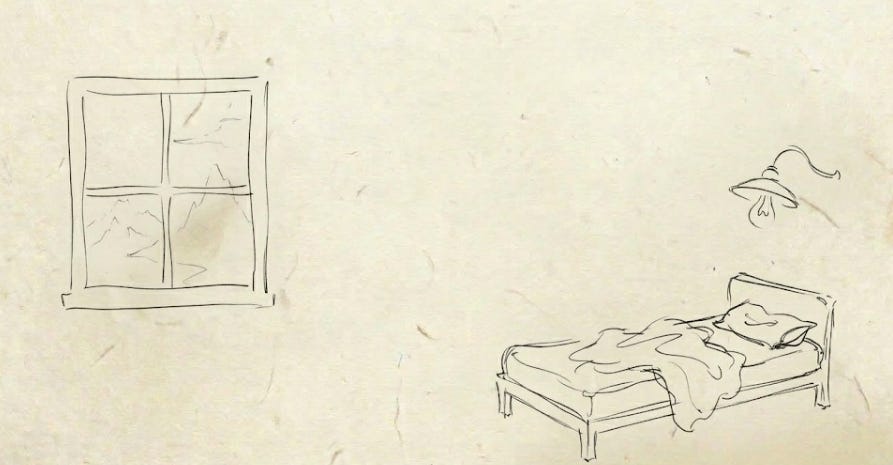
The question arrived with twilight, slipping in after the usual jostle for pillow real estate. He asked it casually, as if checking tomorrow’s weather. Not weighty nor fearful, just wonder floating in the dim glow of the sagging wall lamp that barely clung to its mounting. A child’s room has its own gravity.
I let the question linger. This seven-year-old’s mind flourished in open ground. My task: listen, perhaps drop a few nutrient-rich seeds, and let imagination breathe in that rich, deep mind-soil he tended.²
“Thanks for asking,” I said. “I love this question. I wonder about it daily, and still have no real knowing. No one does for sure.”
He nodded, unfazed. I volleyed back: “What do you think happens?”
He scrunched his face thoughtfully, eyes grinning in the half-light. “I don’t know. But I’m curious to find out… Actually, I’m excited about it.”
A pause snuggled between us. Did he mean soon?
“But not yet,” he added, catching my thought. “Not too soon. Because what if nothing happens? Then I wouldn’t get to live.”
Death, it turns out, makes excellent bedtime conversation when you’re seven-turning-eight. No existential dread, philosophical posturing, or religious hand-wringing. Just unobstructed wonderment about life’s confounding exit strategy.
His curiosity carried caution while his wonder acknowledged gravity, all without contradiction. He sensed what adults struggle to accept: paradox. He carried no fear into it. No one had handed him an answer to defend, so nothing in him flinched. He held presence and absence at once, and that holding opened ground where opposites root and grow together.
I felt Heraclitus murmur over my shoulder: “The harmony of the world is a harmony of opposites, like the bow and the lyre.”³ The lyre sings when its strings pull against each other. The bow sends arrows when its string strains against the curve. Tension allows possibility.
In Greek, biós means bow and bíos means life; a mere accent shifts meaning. The first is a weapon, its power drawn from strain. The second is a lifetime, a mode of living, the daily arc we trace between rising and resting. Heraclitus summarily wordplayed: “The name of the bow (biós) is life (bíos), but its work is death.”⁴ One word, two forms: life stretched between creation and undoing, each drawn by the same string.
This twilight wonderer held something and nothing, extending life’s pull in both directions without flinching.
“Maybe we become everything?” I offered when he nodded for my thoughts. “Or nothing,” flexing into his earlier suggestion. “Or, perhaps we return to whatever we were before arriving here?”
He narrowed his eyes along the lamplight stretching across the wall toward the window, then looked at me.
“Maybe we go into that light,” he gestured. “Or become part of the window. Or, maybe, could we go into someone’s eyes?”
I picked my jaw up off the pillow.
Light. Window. Eye. Three ancient portals drawn casually from his room. Sufficiently ordinary portals humans have long used to glimpse what lies beyond – and within. He mapped transcendence as he waltzed between whole and part and whole. No gleaning from preordained teachings, just accepting the room’s offerings as metaphysical fodder. A seven-year-old’s bedtime magic.
He explored existence through what was at hand. Immediate experience greeting infinite mystery under the soft pull of a crooked bedside wall lamp. This wasn’t Brick Tamland in Anchorman, pointing at furniture around the room: “I love lamp.”⁵ He pointed at the window, the light, and his eye and found a portal. I do love that lamp.
Like the bow and lyre pulled taut, each threshold draws potential between what’s seen and what’s never fully known. A synthesis unfettered minds naturally uncover. He took the whole of death, broke it into a light and a window and an eye, then folded those three into something none of them was alone. Whole, to parts, to a richer whole.
Understanding moves like this: we meet a thing entire, break it into pieces we can hold, then let the pieces find each other and rejoin, changed. Philosophers named this turning the hermeneutic spiral. My seven-year-old ran it in toothpaste-splotched pajamas.
He followed the music beyond the measures where adults often stall: in stanzas of graspable pieces where we fragment into certainty and lose the composition. We forget the song as we stiffen into single notes, and let melody move on without us.
In receding twilight, our ideas germinate between mind-space portals. Resonance emerges through the long song of silence spread across the empty prose of meaning. Empty the way that mind-soil lies empty: quiet on the surface, seeded underneath.
Neuroscience affirms what mystics and poets have sung for millennia: meaning and understanding live in and emerge through betweenness.⁶ The generative space where tension hums with creative possibility. It moves the way resonating bows do, one string waking another.
I glimpsed Heraclitus again grinning in the corner of my thought as this child held the bow of life and death in the same breath: “time is a game played beautifully by children” (my emphasis).⁷ This young mind embodied this as he approached eternity with the same playful seriousness he brought to Legos. Perhaps children understand time differently because they haven’t yet learned to fear it?
“What is this, anyway?” he pondered aloud.
I couldn’t answer, so I reached for an observation that Carl Jung surfaced simply: “life is a brief pause between two great mysteries.”⁸ I suggested that perhaps our task might be to illuminate this pause with our potential.
He nodded. He already was this insight. Decades of seeking brought me here by the long road. He arrived between brushing his teeth and asking for water.
We were swimming with uncertainty, and the water was lukewarm.
Naturally ouroborosing the conversation, I asked, “What do you think happens before we arrive here? You know, before we were born?”
He paused, then shrugged. “Maybe the same as what we go into later? Or nothing?”
I couldn’t help but pepper our philosophical salad with a dash of Heidegger’s Geworfenheit: our “thrownness” into existence.⁹ We arrive here without choosing or explanation, facing a world shaped by circumstances we didn’t create.
Giving the salad another toss, I suggested we uncover our thrownness as we live into life’s questions, cocreating experience as we shape and are shaped by our encounters. Our freedom rests in how we attend to this thrownness and participate with what wants to emerge through us.
He nodded knowingly, as if I’d merely confirmed longtime suspicions.
I wasn’t even sure I knew what I just said. Philosophy sounds profound when tossing around word salads. Seven-year-olds, mercifully, don’t seem to mind. They’re too busy living while we just talk about it. Humbled and encouraged, I realized I’d offered compressed wisdom to someone who embodied it naturally.
Children see truths adults often forget, buried under social conditioning and inherited beliefs. My brother and I wrestled with these mysteries at his age, weighted down by the solemn certitudes of heaven and hell our religious upbringing furnished. This young seeker swam freer with fewer prescribed buoys to paddle around. Not knowing was an “answer.” When we relax our habitual reach for sureness, quiet wisdom serves as shoreline.
We were swimming with uncertainty, and the water was lukewarm.
The waters of imperfect knowing offer swimming lessons as life is, full of complexities and strange surprises.¹⁰ The virtue of mortality’s mystery releases us from fear’s confines and the degradation certainty most certainly delivers. Choices matter because time does, and each choice is a movement with living rather than waiting. Get off the banks and wade into the water.
We are the permission to grow. Seeds don’t ask for permission, they just do.¹¹ They grow into whatever it is they were already becoming.
Freedom’s tucked into that growing as we coauthor life spread across the stories we invent.¹² Permission to write comes from the simple fact of being here, thrown into this luminous pause between mysteries.
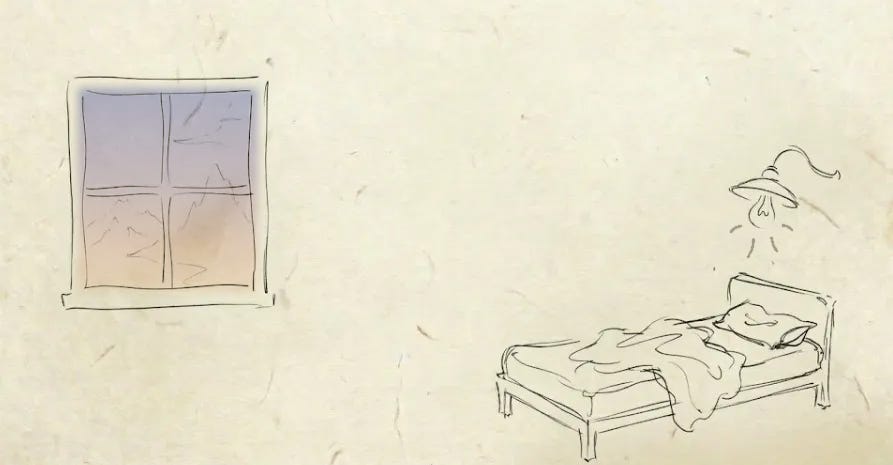
Twilight conversations expose how reality forms differently around the day’s edges, neither fully light nor dark but a merging between. A threshold that shapes existence itself.
Betweenness lives where opposites extend toward each other, letting something new vibrate. Like music, it’s born in relation: between notes and silence, tension and release. Meaning rides the resonance that breathes the whole, reality pulsing through relationships where each note depends on the others.
Science keeps arriving at this terrain and finding the mystics already camped there. It shows up with sharper tools, and every instrument turns out to be a portal.
Iain McGilchrist, a neuroscientist and psychiatrist, spent decades watching how the brain attends, and calls betweenness the living interval that generates understanding.¹³
In 1974, Lewis Thomas, a cell biologist, stared down his microscope long enough for it to become a window: he looked up and saw Earth itself as one living cell, humanity tucked inside its membrane.¹⁴
Carlo Rovelli, a quantum physicist, followed matter down to the smallest scale we can measure and found no things at all, only relationships. No interaction, no fact of the matter.¹⁵ A neuroscientist, a biologist, a physicist (no, this isn’t the beginning of a joke): different light, different window, different eye, all humming a tune Heraclitus carried twenty-five centuries ago. From mitochondria to ecosystems to the cosmos, relationships vibrate all the way down and all the way up.
Indeed, it’s the relation between neurons where meaning sparks, the silence between heartbeats where life unfolds, the interconnected space between self and other where love arises. Science, in its most poetic moments, hums along with what mystics have long known: the pulse of life emerges from the currents between things, not from the things themselves.
Betweenness offers ways of seeing. Erwin Chargaff, a twentieth-century biochemist with a poet's grudge, said the “great biologists worked in the very light of darkness. We have been deprived of this fertile light.”¹⁶ Too much analytic glare blinds us to what actually lives before us.
Chargaff pictured a flashlight beam in a lumber room: useful, yes, yet narrowly fixed on individual boards and beams. Only when our eyes soften to the dark does a vaster architecture appear around and above.
Everything, he warned, has been dragged into the self-conscious, verbalized, analytic way of thinking. Our hunger for certainty and “knowing” often dries out the very field that yields wisdom. The fertile light of night lies in the contours of darkness.
A century and a half earlier, the German philosopher Friedrich Hegel sensed the same rhythm when he wrote, “the owl of Minerva begins its flight only with the onset of dusk.”¹⁷ Watchful wisdom takes flight at twilight, when day bends toward night. The middling hours unveil potential often concealed in the fixed brightness of noon or the blind weight of midnight. Imagination and wisdom soar in the charged interval where light and dark dissolve into each other. Opposites transcend in betweenness.
The day’s edges invite us to linger, to dwell in that generative space instead of rushing through to conclusions. Something vital stirs between knowing and unknowing, self and world, question and answer, light and dark. Clarity ripens in its own season, and, more importantly, when we’re ready to receive it.
My friend and mentor once told me, “the in-between is where we learn to love the questions as much or more than the answers. Living our clunky, chunky lives not for others but for our better selves, which is the best show of love we can make to others.”¹⁸ Yes. It reminds me that love flies in the dusk, that uncertain air between what we hold and must release. The dwelling in betweenness.
In betweenness, where dynamic relationships construct our experience of reality, I’ve come to recognize three values that seem to underwrite nature’s movements:
Generosity: potential offered without demand. The gift opens the space where everything else can happen.
Resonance: life vibrates in interdependent relationships, where pattern answers pattern. Pluck one string and another hums.
Harmony: opposites joined into something richer than their parts. It plays through tension, not around it.
The three portals offer ways of living with these values. Light, window, and eye become instruments themselves, chambers through which notes resound and carry. In them, the classical ideals shift shape and carry a modified sound. Goodness becomes generosity embodied. Truth becomes resonance felt. Beauty becomes harmony unveiled. The trifecta of nature’s music.
That music calls for response. As Marc Scibilia sings in “More to This,” a song born from his own daughter’s question about death, “the questions beg an answer, like a song begs a dancer.”¹⁹ A dancer, after all, moves with music, in step yet separate. We join life’s choir and move along its song. As questions beg, we sing our stanza in the key we can, try a melody, and hold our note as long as breath allows. We let go while holding on.
We learn to cradle the question even as answers brush the surface. We take a beat and rest beyond certainty in that open field where harmony vibrates and generous questions unfold into more generous ones. Life is abundant.
Nature’s song reminds us that singing with questions and dancing with answers matters more than pinning them down. Aliveness shapes through resonance, not certainty.
We left our conversation unfinished, held in generous silence where understanding unfolds. No tidy conclusions.
“This process isn’t asking for my meddling,” I thought to myself, as echoes of Jungian analyst James Hollis surfaced: “Beware of those who offer answers. They may be sincere, but their answers are not necessarily yours.”²⁰
My potential manifests when I keep the fertile field open to let seeds do their seeding. When I resist adding to cycles of tribal conditioning, young minds stretch toward their fullest imaginative reach.
If I allow potential room to manifest at its natural pace, imagination breathes in its ever-changing becoming. A becoming where harmony re-forms, and so often yields beautiful ruptures.
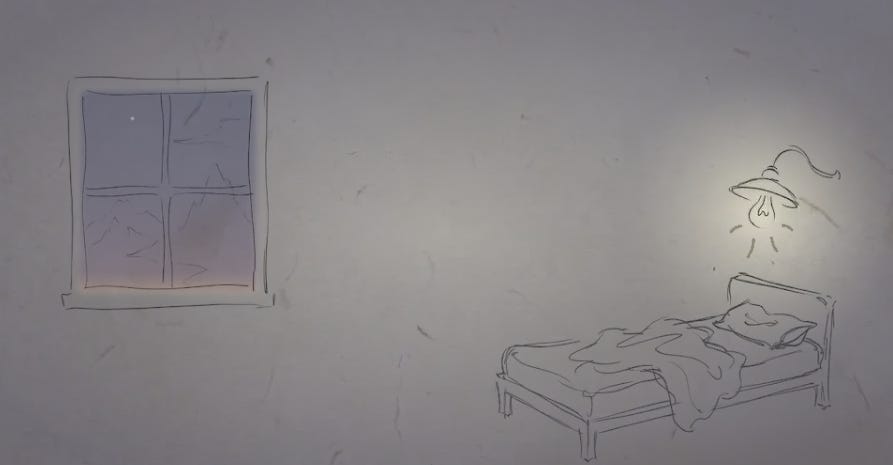
The lamp’s low glow shifted, casting new shadows across familiar walls. The room held open its portals. And somewhere in the dark the bow called life hummed with possibility.
As our conversation drifted into night, he rolled onto his side, content with frayed, untied threads. The lamp sputtered against the darkened wall as the window quietly mirrored its stillness. His eyes closed, but his wonder stayed open.
In that good, unsettled space we softly inched closer to truth. A truth not of answers but of askings held with care. Our small contribution to the endless spiral connecting child to cosmos, question to quest, finite thought to infinite mystery. A taste of the beautiful, unfinished business of the universe.
If we resist our urge to define and fix things, to pin down the unknowable into neat little boxes, and instead learn to swim with uncertainty, we might just glimpse again the quiet wisdom of unencumbered minds. In betweenness, where breath meets world and self discovers other, nature reveals itself as endlessly generous with potential, resonant in relationship, and harmonious in its tensions.
At last, we return to the day’s edge, where dusk exhales and light bends toward dark, presence presses into absence, and answers dissolve into questions. Twilight holds the field where wisdom takes flight, imagination breathes, and love unveils itself as the luminous potential between mysteries.
So... what does happen when we die?
NOTES
¹ Rainer Maria Rilke, Letters to a Young Poet, trans. Ulrich Baer (Warbler Classics, 2022), 30. My conversation with my son unfolded in that same falling dusk, when external roles slipped away and relationship came quietly alight at the day’s edge.
² Growing up, my older brother used the phrase “let imagination breathe” in his art, poetry, and music. This is a nod to that enduring mindset. You can follow his work on Instagram @solomonbehnke.
³ Heraclitus, Fragments, trans. Brooks Haxton (New York: Penguin Classics, 2001), 37, fragment 56. Heraclitus of Ephesus (c. 535–c. 475 BCE), often called “the Obscure,” left only fragments, yet his vision of flux, tension, unity of opposites, and logos shaped philosophy from the Stoics to Hegel to Nietzsche, and, humbly to me. Logos refers to the rational, ordering principle of the universe that structures and governs all of reality. He often linked flux and logos to fire as a symbol of constant transformation. His river image, “you cannot step twice into the same river,” still echoes as shorthand for reality’s ceaseless change.
⁴ Heraclitus, fragment 64 (=B48), quoted in S. Marc Cohen, Heraclitus Lecture, University of Washington, last updated September 21, 2016, accessed August 15, 2025, https://faculty.washington.edu/smcohen/320/heracli.htm.
⁵ “I love lamp – Anchorman,” Anchorman: The Legend of Ron Burgundy, YouTube video, August 1, 2013,
⁶ Stephen Grossberg, “The Resonant Brain: How Attentive Conscious Seeing Regulates Action Sequences That Interact with Attentive Cognitive Learning, Recognition, and Prediction,” Attention, Perception, & Psychophysics 81, no. 7 (2019): 2237–2264, https://doi.org/10.3758/s13414-019-01789-2.
⁷ Heraclitus, Fragments, trans. Brooks Haxton (New York: Penguin Classics, 2001), 51, fragment 79.
⁸ Carl Jung, quoted in James Hollis, Living an Examined Life: Wisdom for the Second Half of the Journey (Boulder, CO: Sounds True, 2018), 79.
⁹ William Blattner, Heidegger’s ‘Being and Time’: A Reader’s Guide, 2nd ed. (London: Bloomsbury Academic, 2023); Robert G. Fox, “On Thrownness,” International Focusing Institute, accessed August 3, 2025, https://focusing.org/articles/thrownness.
¹⁰ Again I find James Hollis writings inspiring and succinct. I drew bits of these ideas in this paragraph from his work, Living an Examined Life, 79, 96.
¹¹ This line was directly inspired by the elegantly moving song by Luis Berra, “Seeds Don’t Ask for Permission,” released May 29, 2020. Spotify.
¹² The poetry put to beats by the artist Mindchatter inspired this line. See Mindchatter, “Don’t Trust A Thought,” Maison Arts, released August 15, 2025, Spotify,
¹³ Iain McGilchrist, The Matter With Things: Our Brains, Our Delusions, and the Unmaking of the World (London: Perspectiva Press, 2021). For more discussion on the topic see: Elizabeth Oldfield, “Iain McGilchrist on The Divided Brain and Perceiving the Sacred,” Theos Think Tank, November 1, 2023, https://www.theosthinktank.co.uk/comment/2023/11/01/iain-mcgilchrist-on-the-divided-brain-and-perceiving-the-sacred and Jenny Mackness, “Understanding Betweenness – Seeing Beyond the Parts,” Jenny Mackness Blog, October 10, 2018, https://jennymackness.wordpress.com/2018/10/10/understanding-betweenness-seeing-beyond-the-parts/.
¹⁴ Lewis Thomas, The Lives of a Cell: Notes of a Biology Watcher (New York: Viking Press, 1974).
¹⁵ I refer here to the primacy of relations: the view that reality is fundamentally relational, and that individual "things" arise from relationships rather than the other way around. Relationship precedes relata. A "self" and an "other" emerge within their relation rather than existing first as separate entities that later connect. The idea echoes across disciplines: Iain McGilchrist's relational model of knowing, Pierre Teilhard de Chardin's theology of evolutionary convergence, and Carlo Rovelli's Relational Quantum Mechanics, which proposes that physical properties exist only in relation to other systems. For an accessible entry, see Carlo Rovelli, Helgoland: Making Sense of the Quantum Revolution, trans. Erica Segre and Simon Carnell (New York: Riverhead Books, 2021). Some push the resonance further still: the biologist Rupert Sheldrake's speculative hypothesis of morphic resonance imagines nature carrying memory through resonant fields, pattern answering pattern across time. Mainstream science keeps Sheldrake at arm's length, and I flag him here as an evocative outlier rather than settled ground. Either way, reality reads less like a collection of isolated particles and more like a field of dynamic connections.
¹⁶ Erwin Chargaff, Heraclitean Fire: Sketches from a Life before Nature (New York: Rockefeller University Press, 1978), 107.
¹⁷ In Roman mythology, Minerva was the goddess of wisdom, strategy, and the arts, identified with the Greek Athena. Hegel’s image of the “owl of Minerva” reflects wisdom’s retrospective nature. Philosophy often spreads its wings only in twilight, after life’s events have already unfolded. See: G. W. F. Hegel, Elements of the Philosophy of Right, ed. Allen W. Wood, trans. H. B. Nisbet (Cambridge: Cambridge University Press, 1991), 23.
¹⁸ Dr. Joseph McGill, text message to author, August 2025. Dr. McGill is a personal friend and mentor.
¹⁹ Marc Scibilia, “More to This” (Nashville: Good Lander Records, 2024), Spotify,
²⁰ Hollis, Living an Examined Life, 4.